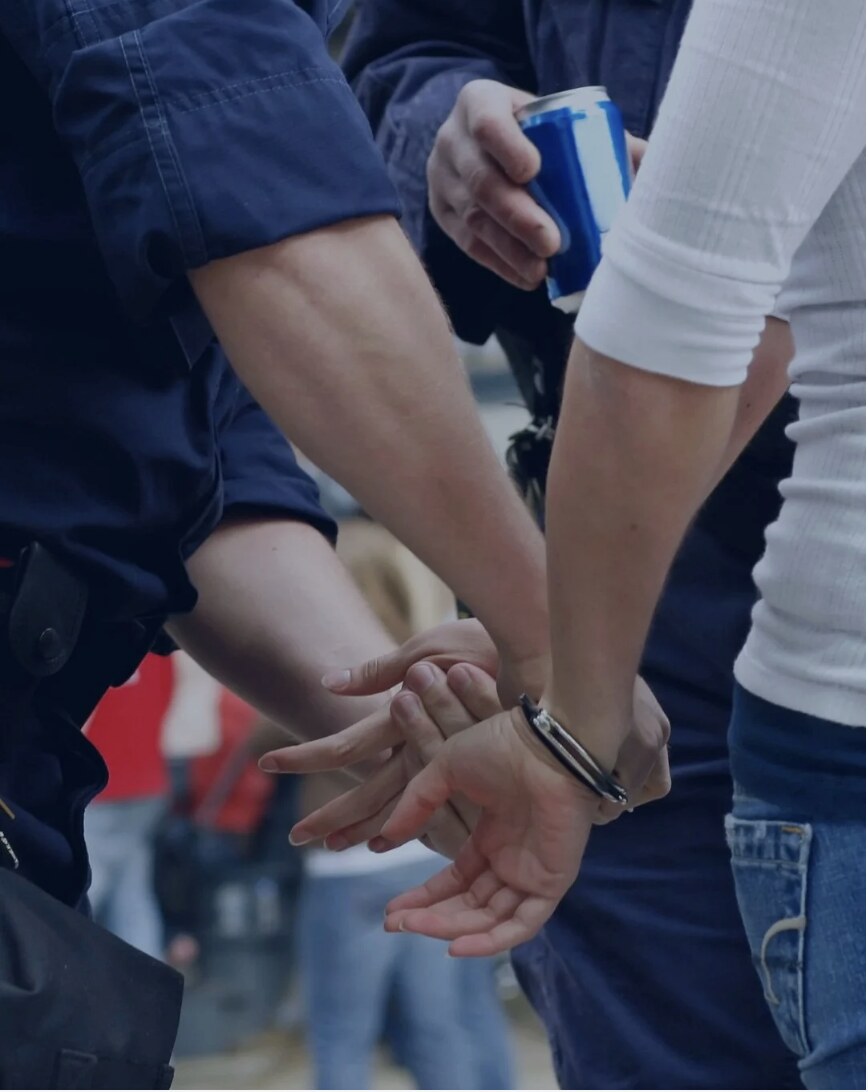
When the police or another government actor violates your constitutional rights, the system is built to make you go away quietly. Segal Law Firm makes sure you don't have to.
We represent people whose civil rights were violated by police, corrections officers, and other government actors, from excessive force and false arrest to malicious prosecution and conditions of confinement. These cases are hard. We take them anyway, and we win them.
What civil rights claims actually cover
Federal law (42 U.S.C. § 1983) and state law together give you the right to sue when a government actor, usually a police officer, sheriff, or corrections officer, violates your constitutional rights under color of law. This includes the Fourth Amendment (unreasonable seizure, excessive force), the Fourteenth (due process, equal protection), and others.
These cases are difficult because of qualified immunity and procedural traps. Successful plaintiffs win not just money damages but, in many cases, attorney's fees paid by the government, a major reason we can take strong cases on contingency.
What you may recover
Compensatory damages
Punitive damages
Medical & psychological care
Lost wages
Attorney's fees (statutory)
Injunctive relief
What to do after a rights violation
These steps preserve evidence and protect you legally.
Get medical attention
Even minor injuries, bruises, abrasions, anxiety symptoms, should be documented immediately by a doctor.
Photograph injuries & scene
Visible injuries, location, any property damage. Get copies of any video, body cam, surveillance, bystander phones.
Write down everything
Officer names and badge numbers, witness contact info, time and location. Memory fades, write it down today.
Don't talk to investigators alone
If you're charged or asked to give a statement, invoke your rights. Then call us.
Why clients choose Segal for civil rights
Federal § 1983 experience
We litigate in federal court regularly, where civil rights cases live or die on procedure and pleading.
We push back on qualified immunity
Qualified immunity is the defense's favorite shield. We know how to plead around it and how to beat it.
Independent investigation
We don't rely on the police's own version. We obtain CCRB records, IAB files, body-cam footage, and prior complaint history.
Discreet, dignified handling
These cases are often traumatic. We handle them with the seriousness and respect they deserve.
Related situations
Injuries like these sometimes overlap with other areas of law. These pages may be helpful background, whether any of them applies to your situation is something an attorney would need to review with you.
Claims against NYC or other public entities often require a Notice of Claim within 90 days. Some federal claims also have unique timing. Call us right away.
Beatings, choke holds, taser misuse, K-9 attacks, shootings. We pursue both the individual officers and the municipality.
False arrest & wrongful detention
Arrests without probable cause, detention after charges drop, mistaken-identity holds. Each day counts as damages.
Malicious prosecution
When officers fabricate evidence, lie in reports, or pursue charges they know are unsupported.
Failure to intervene
Officers who watch a colleague violate rights and do nothing can be liable themselves.
Conditions of confinement
Inhumane jail or prison conditions, denial of medical care, assaults, retaliation, abuse.
Discrimination & profiling
Stops, searches, or treatment based on race, religion, gender or other protected status.
Retaliation for protected speech
Arrests or retaliation against protesters, journalists, or people filming police.
Wrongful death
When excessive force or deliberate indifference takes a life, families can pursue federal and state claims.
A deeper look
How a New York civil rights claim is built, timed, and valued
Suing the government is not like suing a private party. Immunity doctrines, short notice deadlines, and a mix of federal and state law all shape strategy from the first phone call. Here is what actually happens in these cases.
Section 1983: the federal engine behind most civil rights suits
42 U.S.C. § 1983 does not create new rights, it creates a remedy against anyone acting 'under color of state law' who violates rights guaranteed by the Constitution or federal statute. Most police misconduct claims, excessive force, unlawful search, false arrest without probable cause, are framed as Section 1983 actions in federal court.
Because § 1983 targets individual officers and, under certain conditions, municipalities themselves, a well-pled complaint identifies exactly which officers did what, and whether a city policy or pattern of misconduct contributed to the violation.
Qualified immunity: the defense that decides most cases
Qualified immunity shields government officials from liability unless they violated a constitutional right that was 'clearly established' at the time, meaning existing case law would have put a reasonable officer on notice that the conduct was unlawful. Courts frequently dismiss claims at the motion-to-dismiss or summary judgment stage on this basis alone.
Defeating qualified immunity requires pleading specific, analogous precedent and a detailed factual record, body camera footage, radio transmissions, and witness accounts, showing exactly what the officer knew and did. Vague allegations rarely survive; specificity does.
Monell claims against the City itself
Under Monell v. Department of Social Services, a municipality can be held liable under § 1983 only where the constitutional violation resulted from an official policy, a widespread custom, or a failure to train that amounts to deliberate indifference. A single officer's bad judgment, standing alone, generally is not enough to reach the City's own liability.
We build Monell claims using CCRB substantiated-complaint data, prior lawsuits and settlements involving the same precinct or officer, NYPD Patrol Guide provisions, and disciplinary records obtained through litigation or FOIL requests.
State-law claims run alongside federal claims
New York also allows common-law and statutory claims for false arrest, false imprisonment, malicious prosecution, assault and battery, and intentional infliction of emotional distress against officers and municipalities. New York City has also enacted its own local right of action for biased policing under the NYPD accountability laws.
These state claims often carry different elements and defenses than the federal claims, which is why civil rights cases are typically pled with both federal and state counts together to maximize the theories available at trial.
Notice of Claim and the statute of limitations
Any state-law tort claim against New York City or another municipality generally requires a Notice of Claim within 90 days of the incident under General Municipal Law § 50-e, followed by suit within one year and ninety days. This deadline is strict and jurisdictional, missing it typically forecloses the state claims entirely, though it does not affect federal § 1983 deadlines.
Federal § 1983 claims borrow New York's three-year personal injury statute of limitations. Because the state and federal clocks run differently, and because notice of claim requirements do not apply to the federal claims, we evaluate every case under both timelines from day one to avoid losing any available theory.
90-day Notice of Claim for state-law claims against NYC
1 year, 90 days to sue on state claims after that
3-year statute of limitations for federal § 1983 claims
Different accrual dates for false arrest versus malicious prosecution
Fee-shifting: why plaintiffs' attorneys can take these cases
42 U.S.C. § 1988 allows a prevailing plaintiff in a § 1983 case to recover reasonable attorney's fees from the defendant. This fee-shifting provision exists precisely because civil rights cases are expensive and time-consuming to litigate, and Congress wanted private attorneys to be able to enforce constitutional rights without depending on large individual damages awards.
That statutory fee award is separate from, and in addition to, any compensatory or punitive damages recovered by the client, which is part of why we can take strong civil rights cases on contingency without asking clients to pay hourly fees.
What the City and its lawyers will argue
The New York City Law Department defends these cases aggressively and consistently: it will argue the officer had probable cause or reasonable suspicion, that the force used was objectively reasonable given the totality of the circumstances, that qualified immunity bars the claim, and that any municipal policy claim is unsupported speculation.
We counter with the same tools every time: preserved body-worn camera footage (obtained quickly, before retention periods expire), CCRB complaint histories, radio runs, medical records documenting injury consistent with excessive force, and independent witnesses located before memories fade.
What these cases are worth and how long they take
Value depends on the severity of the physical and psychological harm, the duration of any wrongful detention or incarceration, lost wages and reputational harm, and whether punitive damages are available against an individual officer for malicious or reckless conduct. Malicious prosecution and wrongful conviction cases, where someone was jailed or prosecuted based on fabricated evidence, tend to carry the highest values because of the liberty interest at stake.
Most civil rights cases resolve in 2 to 3 years in federal court, longer if qualified immunity is appealed on an interlocutory basis, since defendants have a right to immediately appeal the denial of qualified immunity before trial.
Where we bring civil rights claims across New York
We represent clients in civil rights matters throughout Manhattan, Brooklyn, Queens, the Bronx, Long Island, and Staten Island, litigating against the NYPD, corrections officers, and other municipal and county law enforcement agencies in both federal and state court.
Manhattan
Brooklyn
Queens
The Bronx
Staten Island
Long Island
Nassau County
Suffolk County
Westchester County
NYPD misconduct claims
County jail & Rikers claims
Federal court (SDNY & EDNY) litigation
Frequently asked
Answers before you call
What is a Monell claim?+
A Monell claim holds a municipality like New York City directly liable under Section 1983 when a constitutional violation resulted from an official policy, a widespread custom, or deliberate indifference in training or supervision, not just one officer's isolated bad judgment.
Do I need a Notice of Claim to sue the NYPD?+
For state-law claims like false arrest or assault against the City, yes, a Notice of Claim is required within 90 days under General Municipal Law § 50-e. Federal Section 1983 claims don't require that notice, but we evaluate both tracks together so nothing is missed.
How long do I have to sue for a federal civil rights violation?+
Section 1983 claims borrow New York's three-year statute of limitations for personal injury. State-law claims against a municipality run on a much shorter clock, so it's important to identify every available claim early.
Can I sue an individual police officer personally?+
Yes. Section 1983 claims are typically brought against the individual officers involved, and in appropriate cases against the City itself under Monell. Officers can also be liable for punitive damages in cases involving malicious or reckless conduct.
What if body camera footage gets deleted before I call a lawyer?+
NYPD body-worn camera footage is subject to retention schedules and can be overwritten. We send preservation demands and, where necessary, seek expedited discovery to secure footage, radio transmissions, and CCRB records before they're lost.
Is there a cap on what I can recover in a civil rights case?+
There is no statutory cap on compensatory or punitive damages in a federal Section 1983 case. Value depends on the severity of harm, duration of detention or prosecution, and the strength of the evidence against qualified immunity.
Can I really sue the police?+
Yes. Federal law (42 U.S.C. § 1983) and state law together allow lawsuits when officers violate your constitutional rights. The cases are hard, but they're absolutely possible, we've won them.
What is qualified immunity?+
A judge-made defense that protects officers from liability unless they violated a 'clearly established' right. It's often the central battle in civil rights cases, and we know how to fight it.
How long do I have to file?+
Most § 1983 claims have a 3-year federal statute, but state-law claims and notice of claim requirements (90 days for NYC) can shorten that. Don't assume, call.
Will I get my legal fees back?+
If you win a § 1983 case, federal law makes the government pay your reasonable attorney's fees. That's a major reason we can take meritorious cases on contingency.
What if I was guilty of the underlying charge?+
It depends. Excessive force claims survive even if the arrest was lawful. Malicious prosecution claims usually require the charges to have been dismissed or you to have been acquitted. We'll talk through your situation.
Will this be public?+
Civil rights cases are public court matters, but we handle the press, social media, and any public-facing aspects with discretion and your input.
Contact
Your rights were violated. Let's hold them accountable.
Free, confidential consultation. Direct attorney contact. No fee unless we recover.